10 Common CV Mistakes That Stop You Getting Job Interviews (And How to Fix Them)
You've applied for 10, 20 or even 50 jobs in the UK, but you're still not getting invited to interviews.
You have the skills. You may even have years of work experience. Yet every application seems to end with silence or another rejection email.
Sound familiar?
The problem might not be your experience. It could be your CV.
Many job seekers make simple CV writing mistakes that make it harder for employers to recognise their skills and experience.
This is particularly challenging if you're new to the UK, English isn't your first language, or you're unfamiliar with how British employers expect a CV to look.
The good news? Most CV mistakes are easy to fix once you know what to look for.
In this guide, we'll explain 10 common CV mistakes UK job seekers make, how to avoid them, and how to create a professional UK CV that gives you a better chance of getting interviews.
1. Using the Wrong UK CV Format
One of the biggest mistakes job seekers make is using a CV format that doesn't match UK recruitment expectations.
Different countries have different CV requirements.
For example, in some countries, it's common to include your photograph, date of birth, marital status and other personal details.
In the UK, these details are generally unnecessary.
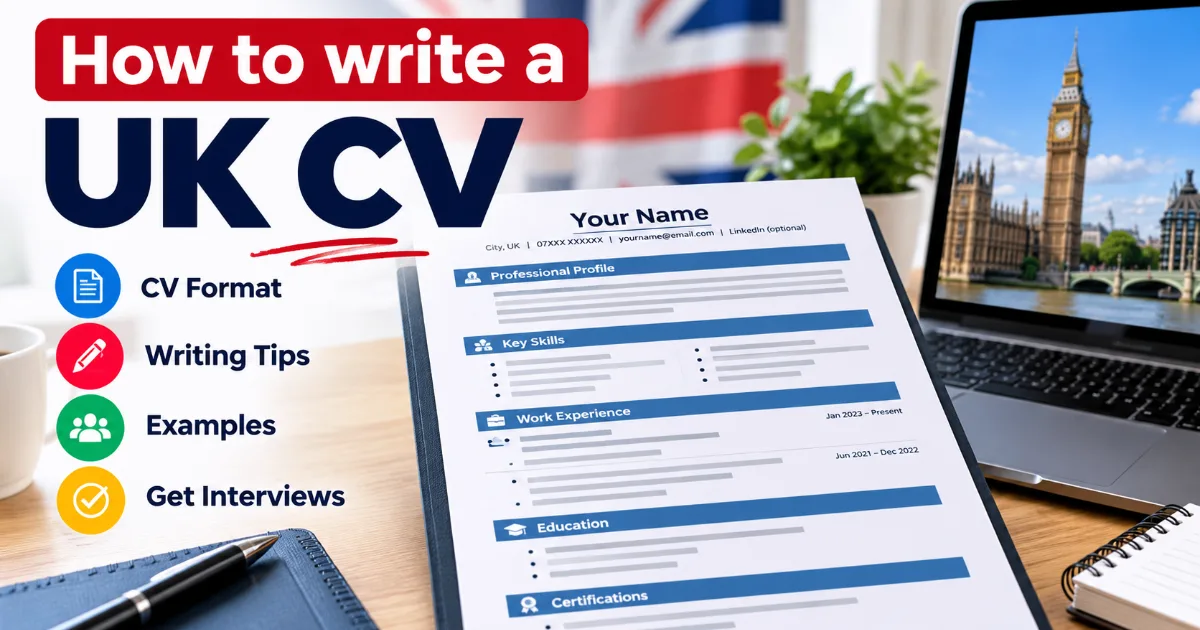
### What a UK CV Should Include A standard UK CV usually contains:
- Full name and contact details
- Professional summary or personal statement
- Work experience
- Relevant skills
- Education and qualifications
- Professional training or certifications
Most UK CVs are approximately one to two A4 pages long, although specialist roles may require longer documents.
How to fix it: Use a clean, professional UK CV template with clear headings and readable fonts.
If you're unsure where to begin, CVLingo helps you create a UK-format CV for free by answering simple questions about your experience and skills.
2. Sending the Same CV for Every Job
Imagine applying for a warehouse job, a customer service position and an administrative role using exactly the same CV.
Although some of your skills may apply to all three positions, employers are looking for different things.
A warehouse employer may prioritise physical organisation, stock handling and health and safety awareness.
A customer service employer may look for communication skills, problem-solving and experience dealing with customers.
An office administrator may need Microsoft Office skills, record management and attention to detail.
How to Fix This Mistake
Before applying for a job:
- Read the job description carefully.
- Identify the main skills and qualifications required.
- Highlight the relevant experience you already have.
- Adjust your professional summary to match the position.
- Include relevant keywords naturally throughout your CV.
You don't need to rewrite your entire CV every time. Small, relevant adjustments can make your application stronger.
3. Writing a Weak Personal Statement
Your personal statement is usually one of the first sections an employer sees.
It's your opportunity to introduce yourself and explain why you're suitable for the position.
Unfortunately, many job seekers use generic statements that don't communicate their strengths.
Weak CV Personal Statement Example
"I am a hardworking and motivated person who is looking for a good job. I work well with others and can do many different tasks."
There's nothing necessarily wrong with these qualities, but the statement doesn't explain what the applicant can offer.
Better Personal Statement Example
"Reliable and organised warehouse operative with three years of experience in stock handling, order picking and maintaining safe working environments. Confident working in fast-paced teams, following health and safety procedures and meeting daily productivity targets. Seeking a warehouse position where I can contribute my practical experience and strong work ethic."
The second example is more specific and relevant.
How to fix it: Write three to five sentences that describe your experience, strongest skills and the type of job you're applying for.
4. Including Too Much Personal Information
Some people include unnecessary personal details on their CV because that's what they're used to doing in their home country.
However, UK employers generally don't need to know your age, religion, marital status or passport number when reviewing your CV.
Information You Should Normally Include
- Your full name
- Telephone number
- Professional email address
- Town or city
- LinkedIn profile, if relevant
Information You Can Usually Leave Out
- Date of birth
- Marital status
- Religion
- Passport number
- Photograph
- Full home address
Employers may ask separate questions about your eligibility to work in the UK during the recruitment process.
How to fix it: Keep your personal information short and professional. Give employers the details they need to contact you.
5. Not Explaining Your Previous Work Experience Properly
Many people have valuable work experience but struggle to describe it professionally.
This is especially common among people who have worked in practical roles such as cleaning, construction, hospitality, retail, warehouse operations and care work.
For example, someone might write:
"Worked in a restaurant."
That statement doesn't tell the employer much about their abilities.
A Better Way to Describe the Same Experience
Restaurant Assistant
- Assisted customers with orders and general enquiries.
- Maintained clean and organised dining areas.
- Worked closely with kitchen staff during busy service periods.
- Followed food hygiene and workplace safety procedures.
- Supported team members to deliver efficient customer service.
These responsibilities show the employer what the applicant actually did.
Use Achievements Where Possible
If you have measurable achievements, include them.
For example:
"Processed an average of 80 customer orders per shift while maintaining accurate records."
Only use figures that genuinely reflect your experience.
How to fix it: Think about your daily tasks, responsibilities, tools you used and problems you helped solve. Describe them using clear action words.
6. Having Spelling and Grammar Mistakes
A CV filled with spelling mistakes, missing words or unclear sentences can make it difficult for an employer to understand your experience.
This doesn't mean you need perfect English to be a good employee.
Many talented people speak English as a second or third language.
The challenge is that writing a professional CV in English can be difficult even when you're highly skilled at your job.
How to Avoid CV Language Mistakes
- Read your CV carefully before sending it.
- Use simple, clear sentences.
- Check spelling and punctuation.
- Ask someone you trust to review it.
- Use a CV builder to help structure your information.
What If English Isn't Your First Language?
You don't have to struggle to explain your work experience in English from the beginning.
With CVLingo, you can answer questions in your own language and create a professional UK-format CV.
CVLingo supports languages including Polish, Romanian, Urdu, Arabic, Portuguese, Spanish, Punjabi and many others.
This helps job seekers communicate their real experience without language being an unnecessary barrier.
Create Your Free UK CV with CVLingo
7. Making Your CV Too Long or Difficult to Read
Recruiters often review many applications for a single position.
If your CV is difficult to navigate, they may struggle to find the information they need.
Common formatting mistakes include:
- Very small fonts
- Long paragraphs
- Too many colours
- Complicated tables
- Excessive graphics
- Inconsistent spacing
- Unclear section headings
How to Improve Your CV Layout
Use a straightforward design with clear headings such as:
Professional Summary
Work Experience
Key Skills
Education
Certifications
Use bullet points to explain responsibilities and achievements.
Choose a professional font such as Arial, Calibri or Aptos.
Aim for one or two pages unless your professional background justifies a longer CV.
Remember, the goal is not to make your CV look complicated.
The goal is to make your experience easy to understand.
8. Not Making Your CV ATS-Friendly
You may have heard the term ATS-friendly CV when searching for jobs.
ATS stands for Applicant Tracking System.
Many employers use these systems to collect, organise and manage job applications.
Some systems can also parse CV information, which means they extract details such as employment history, skills and qualifications.
A CV with complicated formatting may be harder for certain systems to process correctly.
How to Create an ATS-Friendly CV
Use:
- Standard section headings
- Clear job titles
- Simple formatting
- Relevant skills and keywords
- Consistent employment dates
- A file format requested by the employer
Avoid placing essential information inside images or complicated graphics.
For example, if the job description asks for "customer service experience", make sure your CV clearly mentions that experience if you genuinely have it.
CVLingo creates UK-format CVs with clean layouts designed to be ATS-friendly, helping job seekers present their information clearly.
However, no CV format can guarantee that an applicant will pass every recruitment system or receive an interview.
9. Leaving Out Valuable Experience From Another Country
This is a particularly important CV mistake for immigrants and international job seekers in the UK.
Some people believe that because they worked in Nigeria, India, Poland, Romania, Pakistan or another country, their previous experience doesn't matter to UK employers.
That isn't true.
Your professional skills and work experience don't automatically lose their value because you move to another country.
For example, if you worked as a customer service representative in Nigeria for five years, that experience may be relevant when applying for customer service jobs in the UK.
If you worked in construction, hospitality, healthcare, administration or logistics abroad, you may have transferable skills that UK employers value.
How to Include International Experience on Your CV
Customer Service Representative
ABC Services Ltd, Lagos, Nigeria
January 2020 – December 2024
- Responded to customer enquiries through telephone and email.
- Resolved customer complaints and maintained service records.
- Supported daily administrative operations.
- Collaborated with colleagues to improve customer satisfaction.
There's no need to hide the location of your previous employment.
Focus on explaining the experience and skills you gained.
For regulated professions, you may also need UK-specific qualifications, professional registration or recognition of overseas credentials.
10. Not Updating Your CV Before Applying for Jobs
Another common mistake is using an old CV that doesn't reflect your current abilities.
Perhaps you've completed a training course, started volunteering, learned a new skill or gained additional work experience.
If these achievements aren't included, employers won't know about them.
When Should You Update Your CV?
Review your CV when:
- You start looking for a new job.
- You complete relevant training.
- You gain a qualification.
- You change positions.
- You develop new professional skills.
- You achieve something significant at work.
Even if you're currently unemployed, you may have gained useful experience through volunteering, personal projects or community activities.
Include information that demonstrates your suitability for the job.
How to Improve Your CV for UK Jobs
Now that you understand the most common CV mistakes, here is a simple checklist you can use before sending your next application.
Your UK CV Checklist
- My CV follows a clear UK format.
- My contact information is correct.
- My personal statement explains my strengths.
- My work experience is listed clearly.
- I've included relevant skills from the job description.
- My spelling and grammar have been checked.
- My CV is easy to read.
- I've included relevant international experience.
- My qualifications and employment dates are accurate.
- I've saved my CV in the employer's requested format.
If you can tick all ten boxes, you're in a better position to submit a professional application.
How to Create a Professional UK CV for Free
Creating a professional CV doesn't have to be expensive, complicated or stressful.
If you're unsure how to format your CV, describe your work experience or write professionally in English, CVLingo offers a simple way to get started.
What Is CVLingo?
CVLingo is a free CV-building platform designed to help UK job seekers create professional CVs, including people who prefer to communicate in a language other than English.
Instead of starting with a blank document, you answer straightforward questions about your skills, employment history and career goals.
The platform then helps turn that information into a professional UK-format CV.
How CVLingo Works
Step 1: Choose your language
Select from the languages available on the platform.
Step 2: Answer simple questions
Describe your work experience, skills and qualifications in your own words.
Step 3: Download your UK CV
Get a professionally formatted CV that you can use when applying for jobs.
CVLingo is free for job seekers and is designed to make CV creation more accessible.
Build Your Professional UK CV for Free
Frequently Asked Questions About CV Mistakes
What is the biggest mistake people make on a CV?
One of the biggest mistakes is sending a generic CV that doesn't clearly demonstrate how the applicant meets the job requirements. Tailoring your CV to each role can help employers identify your relevant skills and experience.
Why am I not getting interviews even though I have experience?
There can be several reasons, including strong competition, missing qualifications, unclear work experience, poor CV formatting or applying for roles that don't match your skills. Improving your CV can help, but it doesn't guarantee interviews.
Can a bad CV stop me from getting a job?
Yes. A poorly written or difficult-to-read CV may prevent an employer from recognising your suitability for a position.
How many pages should a UK CV be?
For most job seekers, one to two A4 pages is a useful guideline. Some specialist and senior-level positions may require more detail.
Is it okay to use AI to write my CV?
Yes. AI tools can help structure your CV and improve your writing. However, you should review the final document carefully and make sure all information is accurate.
Can I create a UK CV if my English isn't very good?
Yes. You can use a multilingual CV builder such as CVLingo to describe your experience in your preferred supported language and create a professional UK-format CV.
Do UK employers accept work experience from other countries?
Yes. International experience can be relevant to UK jobs, particularly when the skills and responsibilities match the vacancy. Some professions have additional UK licensing or qualification requirements.
What is an ATS-friendly CV?
An ATS-friendly CV uses clear headings, simple formatting and relevant information that recruitment software can more easily process.
Can I create a UK CV for free?
Yes. CVLingo allows UK job seekers to create a professional UK-format CV for free, including support for multiple languages.
Final Thoughts: Don't Let Simple CV Mistakes Hold You Back
Finding a job in the UK can be challenging, especially when you're competing with many other applicants.
But your CV should help employers understand your abilities, not make it harder for them to recognise your potential.
By avoiding these ten common CV mistakes, you can present your experience more clearly, communicate your strengths and improve the quality of your job applications.
And remember, you don't need perfect English or an expensive CV-writing service to get started.
Your skills, experience and hard work deserve to be recognised.
Ready to Create a Better CV?
Stop worrying about formatting, complicated templates and finding the right English words.
Create your professional UK CV in your own language, completely free with CVLingo.